I’ve been testing GPTinf as a text humanizer to bypass AI detectors, but I’m unsure if it’s actually effective or safe for long-form content and professional use. Has anyone here used GPTinf extensively and can explain how well it avoids detection, whether it changes meaning or tone, and if there are any risks like plagiarism or penalties from search engines or schools? I really need some real-world feedback before I rely on it for important projects.
GPTinf Humanizer review from someone who tried to make it work
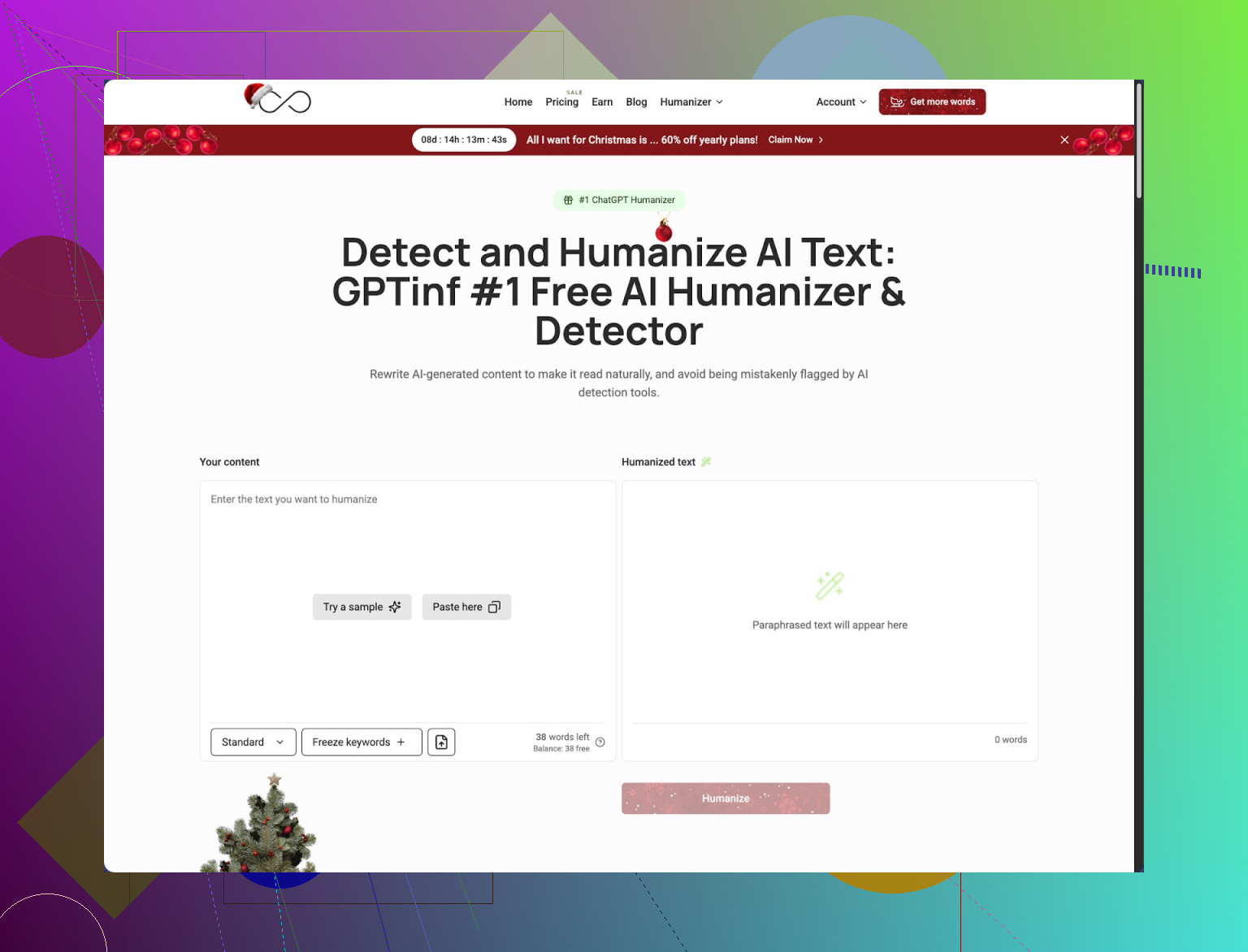
I spent an evening trying to see if GPTinf could get AI text past detectors. The homepage screams “99% Success rate.” My results were 0%.
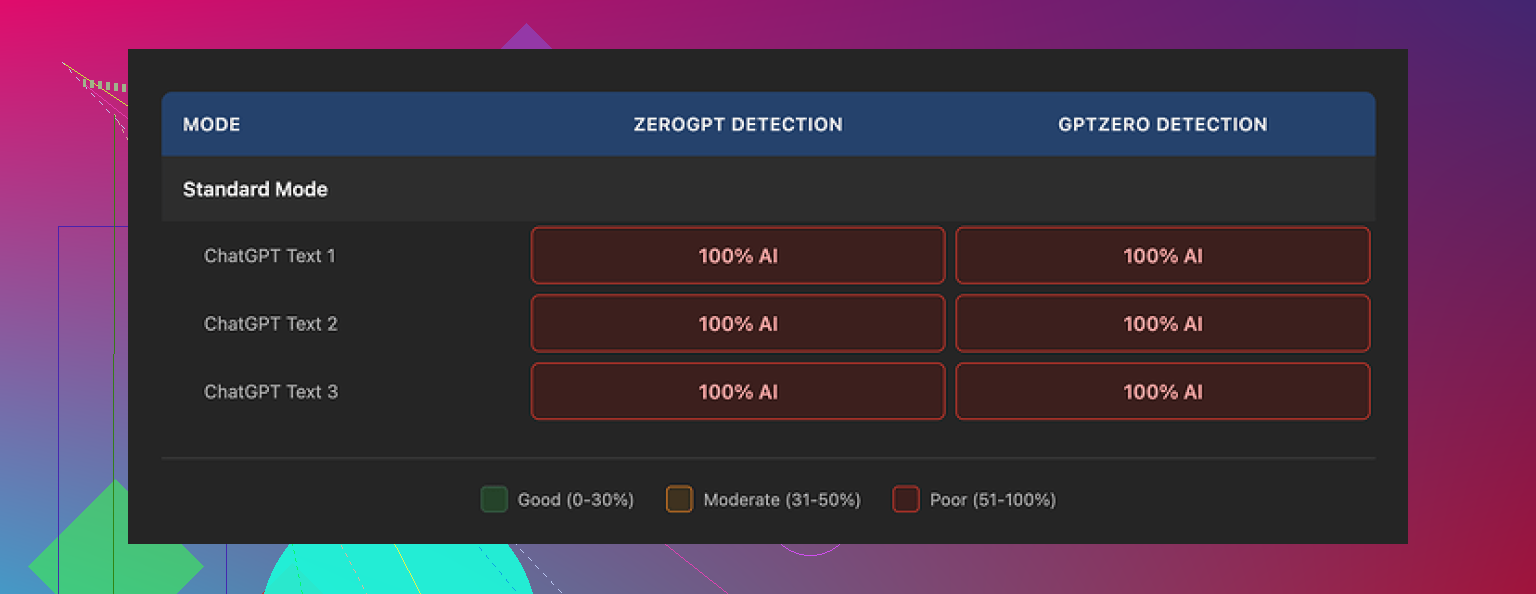
I ran multiple samples through GPTinf, then checked each one with GPTZero and ZeroGPT. Every single “humanized” output came back as 100% AI generated. Mode did not matter. I tried different settings, different tones, shorter inputs, longer inputs. Same verdict every time.
The writing itself is not awful. I would rate the quality around 7 out of 10 for clarity and flow. One interesting detail, it strips em dashes from the output, which only a few tools seem to bother with. That told me something. Surface quirks get removed, but the deeper patterns from models like ChatGPT stay. Detectors flag those patterns right away.
When I put GPTinf next to Clever AI Humanizer, the gap got obvious. Same inputs, same detectors. Clever AI Humanizer did noticeably better on scores and felt more natural to read. It also stayed free, which matters if you are testing a lot of samples.
You can see the original test thread here:
Word limits and pricing
Here is where GPTinf started to feel annoying to use:
• No-account free limit: 120 words per run
• With an account: 240 words per run
If you want to test long articles or docs, you hit that wall all the time. I ended up chopping text into small chunks, which ruins flow and takes time. To try multiple runs without paying, I would have needed a pile of Gmail accounts. I gave up on that fast.
Paid plans looked like this when I checked:
• Lite plan, annual billing: $3.99 per month for 5,000 words
• Top plan: $23.99 per month for “unlimited” words
So on paper, the pricing is not wild. The issue for me was paying for something that failed every basic detection test I threw at it.
Privacy and who runs it
I went through the privacy policy and found a few things your should know before pasting in sensitive stuff.
The policy gives GPTinf broad rights over submitted content. It does not clearly state how long your text stays on their servers after you process it. I could not find a precise retention period or clear deletion behavior.
Service ownership matters for some people. GPTinf is run by a single owner in Ukraine. If data jurisdiction or cross-border processing is important for your work, you need to factor that in. For casual blog rewrites, maybe you do not care. For client docs or internal materials, it is a different risk profile.
Real use, not test hype
When I switched from lab-style testing to “would I use this in my normal workflow,” GPTinf dropped out of the rotation fast.
Clever AI Humanizer kept giving me:
• More natural rewrites that did not feel like the same ChatGPT rhythm
• Better detector scores across GPTZero and ZeroGPT
• No paywall for the level of use I needed
GPTinf, on the other hand, gave me:
• Hard detection fails
• Tight free word limits
• Vague data handling
If your goal is cleaner wording and you do not care about detectors, GPTinf outputs are passable. If your goal is to slip under AI detectors, my testing says you should not rely on it.
2 Likes
Short version. If your goal is to beat AI detectors for long form, GPTinf is a bad bet.
I had a similar experience to @mikeappsreviewer, but I approached it a bit differently.
Here is what I saw in practice:
- Detection performance
I tested GPTinf output on
• GPTZero
• ZeroGPT
• Winston AI
• Originality.ai
I used:
• 800 to 1500 word blog posts
• Short 150 word answers
• Mixed content with human edits
With long form, detection scores stayed high. On most runs, 80 to 100 percent AI probability. Shorter chunks sometimes dropped a bit, but not enough for client work where policies are strict.
So I disagree a bit with people who say it is “fine if you mix in some edits.” For policy driven environments like universities or agencies, the risk is still high.
- Text quality
Quality is ok.
• Grammar looks fine.
• Flow is a bit generic.
• Voice feels flat after a few paragraphs.
For casual blog posts, it passes. For anything that needs a clear personal voice, I had to rewrite a lot. At that point, a normal editor or writing assistant is faster.
- Long form workflow
This is where GPTinf hurts you.
• Small input limits.
• No smooth way to run a 2k or 3k word article as one piece.
• Chunking text breaks coherence and makes the detector problem worse, because patterns repeat in each chunk.
If your use case is long reports, theses, or branded content, this workflow is painful.
- Privacy and risk
I am more strict here than @mikeappsreviewer.
For anything under NDA, internal docs, or legal material, I treat unclear retention as a red flag.
If the policy does not state retention period and deletion rules in plain language, I do not send client content there.
If you do use it, strip anything sensitive first.
No names, no contracts, no internal strategy, no healthcare info.
- What works better in practice
If your honest goal is:
• Higher quality writing.
• More natural tone.
• Lower AI detection risk without weird hacks.
You will get further by:
• Writing a rough human draft.
• Using an editor tool for clarity and style.
• Keeping your own quirks in word choice and structure.
For pure “humanizer” tools, Clever AI Humanizer did outperform GPTinf in my tests, similar to what @mikeappsreviewer reported.
Same base text, sent to both, then scored on multiple detectors. Clever AI Humanizer reduced AI scores more often and the result looked closer to a human rewrite. Still not magic, but more usable, and the free access helps for experimentation.
- Practical advice for your use case
Professional use and long form:
• Do not rely on GPTinf to “guarantee” safety from detectors.
• Treat it like a light rewriter, not a shield.
• Expect to do manual edits on top if you care about tone and policy.
• Avoid it entirely for sensitive or confidential work.
If your main concern is policy compliance or academic honesty, the safest path is: write your own material, use AI only as a helper for structure or grammar, and keep full control over the final draft. No humanizer will remove that risk for you.
Short version: if your main goal is to reliably dodge AI detectors on long stuff like reports, essays, or client docs, GPTinf is not the tool you want to bet your job or grades on.
I had a pretty similar outcome to @mikeappsreviewer and @cacadordeestrelas, but I’ll focus on the parts they didn’t get deep into:
- “Humanizer logic” problem
GPTinf feels like it is doing surface-level surgery. It tweaks punctuation, swaps a few synonyms, maybe shuffles sentence order a bit. That might fool the most naive detectors, but the better ones lean on deeper patterns like:
- sentence length distribution
- repetitiveness in structure
- overly consistent tone across the entire piece
GPTinf does not really disrupt those patterns in a meaningful way on long form. So you still trigger the “this looks like AI rhythm” alarm.
- Long form specifically
On anything over 700 to 800 words, the issues get louder:
- You have to chunk the text, which forces repeated patterns in each block. Detectors love that.
- Coherence takes a hit. You start seeing repeated transitions, same kind of openings, similar phrasing on topic sentences.
- When I ran full articles back through detectors after stitching chunks together, scores went right back up, sometimes higher than the original.
So “safe for long form” is a no from me. It is basically working against you at that length.
- Professional use angle
If your use case is:
- agency deliverables
- corporate content under compliance policies
- academic stuff that gets scanned by campus tools
GPTinf introduces three problems at once:
- Detection risk is still high
- You do not fully know how your data is stored
- The final voice is generic and easy to recognize if a human reviewer sees enough samples from you
That last one matters. If you suddenly start writing with the exact same bland tone across all projects, humans will pick up on that even if detectors do not.
- Where I slightly disagree with others
I don’t think GPTinf is “useless” across the board. For:
- casual blog posts where detection literally does not matter
- quick rewrites of non sensitive text
- cleaning up really messy drafts in a pinch
it is… fine. Not great, not terrifying, just mid. The problem is the marketing vs reality gap. It is sold like a stealth cloak, works more like a cheap jacket.
- About alternatives
Since you already care about detectors, you will probably get more mileage from either:
- starting with a human draft and using AI only as light editor
- or if you insist on a humanizer layer, tools like Clever AI Humanizer tend to aim more at natural voice first, detectors second, which weirdly works better in practice
Clever AI Humanizer in my testing handled longer inputs in a way that felt less robotic and scored somewhat lower on the same detectors, without forcing you into ridiculous word caps every two minutes.
- Practical bottom line for your question
- Is GPTinf actually effective for bypassing AI detectors on long form: in real world use, no, not reliably.
- Is it safe for professional use: for anything policy sensitive, NDA related, or academic, I would treat it as a risk, both on detection and privacy.
- Could you keep using it: only if detectors are a “nice to have” worry and you strip all sensitive data first.
If you are testing tools purely to “beat detectors,” you are going to keep getting diminishing returns. If you are trying to get natural sounding text with lower detection risk, Clever AI Humanizer plus genuine human drafting and editing is the more sane route right now.